

Introduction
The stock market today is one of the most dynamic and exciting financial arenas where millions of investors trade stocks every day. Whether you are a beginner or an intermediate investor, understanding how the stock market works can help you make informed decisions and grow your wealth over time. Many people think that the stock market today is only for experts or those with large amounts of money, but that is a misconception. With the right knowledge, anyone can participate in the stock market and benefit from long-term growth opportunities.
In today’s fast-paced economy, staying updated about the stock market is essential. Prices of stocks change every second based on global events, company performance, and investor sentiment. By following stock market trends and learning key strategies, you can minimize risks and maximize returns. This guide will explain everything about the stock market today, including how it works, why it is important, step-by-step guidance for beginners, benefits, risks, common mistakes, FAQs, and expert tips. By the end, you will have a clear roadmap to start your journey in stock trading and investing confidently.
What is the Stock Market Today?
The stock market today refers to the current state of all publicly traded stocks and securities. It is a platform where buyers and sellers meet to trade shares of companies. These trades determine the price of stocks, which can rise or fall depending on various factors such as economic data, company performance, political events, and market sentiment.
The stock market is not a single entity. It consists of multiple exchanges like the New York Stock Exchange (NYSE), NASDAQ, London Stock Exchange (LSE), and many others worldwide. Each exchange has its own set of listed companies, trading rules, and operational hours. In essence, the stock market provides a regulated environment for companies to raise capital and for investors to earn returns by buying and selling shares.
Why is the Stock Market Important?
The stock market is crucial for several reasons:
- Wealth Creation: Investing in the stock market allows individuals to grow their wealth faster than traditional savings methods.
- Economic Indicator: The stock market reflects the health of the economy. Rising markets usually indicate growth, while declining markets may signal economic trouble.
- Capital for Companies: Companies raise funds by issuing shares to the public, which helps them expand operations and innovate.
- Liquidity: Stocks are highly liquid assets, meaning you can buy or sell them quickly without significant loss of value.
- Passive Income: Through dividends, investors can earn a steady income while their investments potentially grow in value.
Understanding the importance of the stock market helps beginners realize why it is not just about trading but also about strategic long-term financial planning.
Detailed Step-by-Step Guide to the Stock Market Today
Step 1: Learn the Basics
Before investing, understand key concepts:
- Stocks: Shares of a company that represent ownership.
- Bonds: Debt instruments issued by companies or governments.
- Mutual Funds: Investment pools managed by professionals.
- Indices: Market benchmarks like S&P 500 or Dow Jones.
Step 2: Set Financial Goals
Decide whether you are investing for:
- Short-term gains
- Long-term wealth accumulation
- Retirement planning
- Diversifying your portfolio
Clear goals help determine your risk tolerance and investment strategy.
Step 3: Open a Trading Account

To start trading, open a brokerage account with a licensed stockbroker. Ensure the platform offers:
- User-friendly interface
- Low transaction fees
- Access to research and analysis tools
Step 4: Research and Analysis
Before buying stocks:
- Study the company’s financial health
- Check revenue, profit margins, and debt levels
- Monitor market trends and news updates
Step 5: Start with Small Investments
Begin with a small amount you are willing to risk. Consider investing in:
- Blue-chip stocks for stability
- Exchange-Traded Funds (ETFs) for diversification
- Dividend-paying stocks for steady income
Step 6: Diversify Your Portfolio
Avoid putting all your money into one stock. Spread investments across:
- Different sectors (technology, healthcare, finance)
- Various asset classes (stocks, bonds, ETFs)
- Multiple geographic regions
Step 7: Monitor Your Investments
Keep track of your portfolio regularly. Use tools like:
- Market news apps
- Brokerage account dashboards
- Financial newsletters
Step 8: Learn to Manage Risk
- Set stop-loss orders to minimize losses
- Avoid emotional decisions based on market swings
- Review your portfolio periodically and rebalance if needed
Benefits of Stock Market Today
Investing in the stock market today offers numerous benefits:
- Potential High Returns: Stocks historically outperform other investment options over the long term.
- Liquidity: Easily buy and sell shares without delays.
- Ownership: Owning shares gives you partial ownership of companies.
- Dividend Income: Earn regular payouts from profitable companies.
- Diversification Opportunities: Access to global markets and various sectors.
- Inflation Hedge: Stocks often grow faster than inflation, preserving your purchasing power.
Disadvantages / Risks
While investing in the stock market has advantages, it also carries risks:
- Market Volatility: Stock prices can fluctuate dramatically in short periods.
- Loss of Capital: Poor investment choices can lead to losses.
- Emotional Stress: Sudden market drops can cause panic selling.
- Complexity: Understanding financial reports, charts, and trends requires time.
- Fraud Risk: Although rare, some companies may manipulate stock prices or mislead investors.
Common Mistakes to Avoid
- Investing Without Research: Buying stocks blindly can lead to losses.
- Overtrading: Frequent buying and selling increases fees and reduces returns.
- Ignoring Diversification: Putting all money in one stock is risky.
- Chasing Trends: Buying popular stocks without analysis often backfires.
- Neglecting Long-Term Goals: Short-term fluctuations should not dictate strategy.
- Emotional Decisions: Avoid panic selling or greedy buying during market swings.
FAQs About Stock Market Today
1. What is the best way to start investing in the stock market today?
Start with a small investment, research companies carefully, and consider ETFs or mutual funds for diversification.
2. How much money do I need to start investing?
You can start with a few hundred dollars. Many brokers allow fractional shares, making it easier for beginners.
3. Can beginners make profits in the stock market?
Yes, but it requires patience, research, and long-term planning. Avoid expecting instant gains.
4. What are blue-chip stocks?
Blue-chip stocks are shares of well-established companies with a history of stability, consistent growth, and dividend payouts.
5. How often should I monitor my investments?
Check your portfolio regularly, but avoid daily panic over small market fluctuations. Monthly or quarterly reviews are usually sufficient.
6. Is stock market investing risky?
Yes, all investments carry risk. However, careful research, diversification, and long-term planning can reduce potential losses.
7. Should I follow stock market news every day?
Yes, staying informed helps, but focus on credible sources and avoid overreacting to minor news.
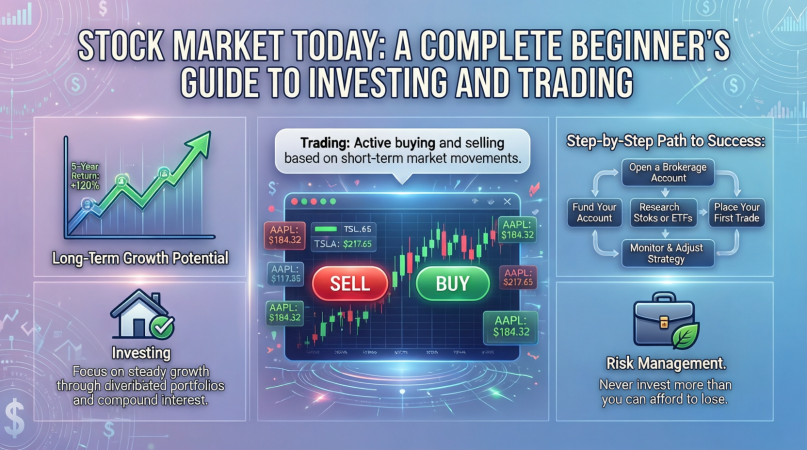
8. What is the difference between investing and trading?
Investing focuses on long-term growth, while trading aims for short-term profits through frequent buying and selling.
Expert Tips & Bonus Points
- Start Early: The earlier you invest, the more time your money has to grow.
- Keep Learning: Read books, attend webinars, and follow credible market analysts.
- Use Stop-Loss Orders: Protect your investment from major downturns.
- Automate Investments: Use SIPs or recurring purchases to stay consistent.
- Focus on Quality Stocks: Choose companies with strong fundamentals.
- Avoid FOMO: Fear of missing out often leads to poor decisions.
- Stay Patient: Wealth in the stock market grows steadily, not overnight.
Conclusion
The stock market today offers countless opportunities for building wealth and achieving financial goals. By understanding its basics, setting clear objectives, conducting thorough research, and managing risks carefully, beginners and intermediate investors can navigate this complex world confidently. While the market carries risks, disciplined strategies, diversification, and continuous learning help minimize losses and maximize returns.
Investing in the stock market is not just about making quick profits; it is a long-term journey toward financial independence. By following expert guidance, avoiding common mistakes, and staying updated with market trends, anyone can participate successfully in the stock market today. Remember, patience, consistency, and knowledge are the keys to becoming a successful investor. Start small, stay informed, and let your investments grow steadily over time.
